
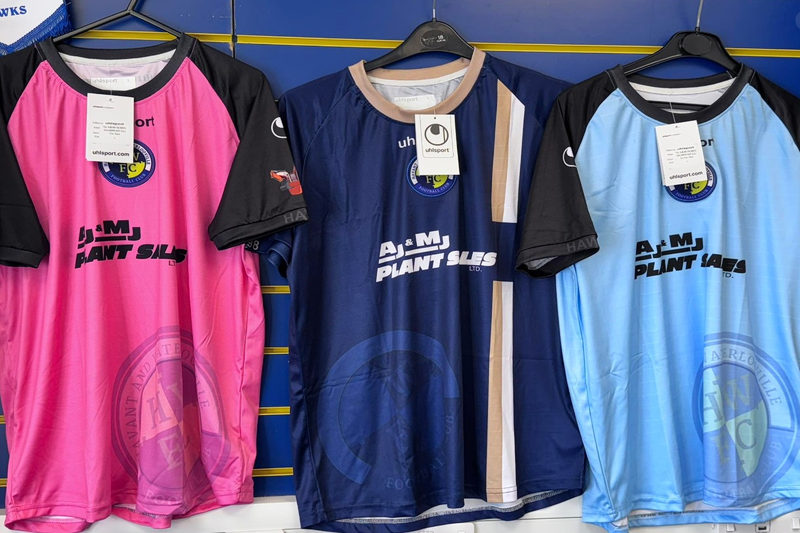
At Portsmouth Hub we are all about supporting local businesses, local charities, and local sports teams. This is why we recently sponsored Havant and Waterlooville FC, or more specifically, we sponsored their kit manager, Richard Pope.
Richard very kindly agreed to do an interview for us as part of the sponsorship, so that readers can get some insight into the job of one of the unsung heroes of the football world, and here it is.
Richard Answers Our Questions
For readers who may not fully understand the role, can you explain what a typical matchday looks like for you as Kit Manager, from arrival at the ground to the final whistle?
Every Matchday comes with its own unique challenges, with nothing ever remaining exactly the same. The way we do things when we are here at Westleigh Park are extremely different to when we travel away from home.
A home matchday is definitely the busier of the two. I will generally be on site for 09:00am where the first thing I’ll do is grab a cup of tea before starting my set-up. Next up I’m straight into kit preparations for the Matchday squad. This will involve ensuring that each player who is due to be in the 16-man squad has each individual piece of kit that they need for the game. Further to this, if we have injured players or players not in the squad, they will also require a smaller amount of kit to complete a rehabilitation or warm-up session. With all of the kit, it ranges from Match tops and warm up gear to flip flops and underwear, we have most things covered for the lads. Different players require different pieces of kit on their own personal preference. This could be players needing cut socks, grip socks or your stereotypical football long socks. After the kit is prepared, it will be taken from the kit room into the dressing room where the room can be set-up ready for player arrivals. Following player kit set-up, I then focus attention to equipment and ensuring that everything is ready for the start of the warmup. Resistance bands, cones, bibs, mannequins and balls are the most important things here as without these, our preparations will be disrupted. Once everything is set-up, I tend to have a bit of spare time to grab a bite to eat but also in the event of something going drastically wrong I have this time available to handle any unforeseen issues. In this time, I will also be filling in the online team sheet based on what the manager has sent over ready for submission. Once the players arrive, I’ll be in and around the dressing room ensuring that the team have everything they need as usually someone has forgotten something. At 14:10, I meet with the Match Officials and a member of the opposition staff to complete the team sheet exchange. It’s at this point where the Officials can outline any concerns which I then will need to relay to Management if applicable. Next comes the team talk from the gaffer after which the team head out to start their warm-up. I’ll be out on the pitch at this point, collecting cones once each section of the warm-up is complete and ensuring we don’t lose any footballs when they go astray. As the players head inside from the warm-up, I also head in to collect all their warm-up kit into the wash trollies. This also gives a chance for the lads to throw any last-minute requests of things they need my way. Once this is done, I head to take my seat on the bench so that I am ready for the start of the game. During the game, I’m usually fairly quiet as there are limited things I need to do. I will be on hand to hand out drinks as and when needed and I also control our substitutions board when necessary for changes or added time. On occasion, we will lose a ball out of the ground, so I’ll need to make sure we have other footballs ready to replace them. Once the final whistle is blown, I will clean down the bench of all kit and equipment before heading inside to collect the match kit from the players to put it on to wash. That’s usually where my day will finish with the last pieces of kit related things to be sorted on a Sunday.
For an away Matchday, this begins the day before where a kit is prepared on a Friday afternoon. The start of a Saturday depends on how far we are travelling but on arrival at the ground, I will load the packed kit into the van and wait on everyone who is travelling with me to arrive. The rest of the day is pretty much the same as a home game apart from all the travel with again the kit being washed the day of the game. This is an absolute must, no matter where across the country we have played. In rare occurrences, when we have a game further away, we will travel on a Friday and stay over the night in a hotel.
At non-league level, kit managers often juggle multiple responsibilities. How does the scope of your role at Havant & Waterlooville differ from what people might expect at a professional EFL or Premier League club?
At Havant & Waterlooville, the overall responsibility of the kit and equipment is down to me. I do have individuals who will provide support in certain areas but should anything go wrong or something be missed it’s my responsibility. This will differ to the Premier League or EFL, as they have a team of people to take care of kit with responsibility being delegated across the team.
Also different to the Football League, the prints that go onto Players kits are not provided (Numbers, Names etc). I have to do all of these manually, inputting onto a computer, sizing, cutting, weeding and heat pressing. This is quite a lengthy process, so signing multiple players on the same day usually results in a late finish.
Being involved in the team sheet exchange is generally a role for the Club Secretary but Gary is usually never to be found as he’s running around doing one of his many other jobs wearing one of his many matchday role hats. This is a very key part of a Matchday as without full compliant completion, the match can’t take place and the club would land in very hot water with the league and other relevant governing bodies.
How much planning goes into a season before a ball is even kicked — particularly around kit ordering, training wear, and ensuring everything complies with league regulations?
Planning for the upcoming Season starts halfway through the current campaign, with preparations beginning in January. The first task for the new season is generally planning and initially designing the kits for the forthcoming campaign. This is a lengthy process but one I work extremely closely with our Technical Kit Partner in executing. The design process generally goes through a number of drafts with bits and pieces being tweaked until we reach a final design that we are happy with. The initial order of Match Kit will be placed at the end of March with the process of kit manufacturing taking several weeks due to the bespoke kit agreement we hold. Training wear ordering will usually follow in May/June with this being a much quicker turnaround ahead of the start of Pre-Season in July. League regulations are constantly changing so this can be an obstacle to navigate sometimes, often last-minute tweaks have to be made to ensure compliance.
Havant & Waterlooville have a strong identity and fanbase. How important is it for you to maintain the club’s image and traditions through the kit and matchday presentation?
Having been involved at the Football Club as Kit Manager since 2009 but having grown up in and around the club, I’d like to think I have a pretty strong understanding of the image that we want to create for ourselves on and off the pitch. The key in creating a strong identity is in the smaller details, sometimes even things that fly under the radar. Recognition of our history and our image comes into the kit with our main standout of this being a quote from the Club Anthem included on the outside of the rear collar.
What are some of the logistical challenges of managing kits in non-league football — such as budgets, storage, travel, and turnaround times between fixtures?
As you’d probably expect, budgetary impacts on us will be vastly different to the Football League. They will have much more money to spend with players going through copious amounts of match shirts each year. The costs of our kit has increased significantly in recent years due to things such as BREXIT and COVID but we always try and limit our expenditure where possible sometimes opting to re-use kit and not always having brand new gear for each campaign.
I’m extremely fortunate in terms of storage as I have quite a large kit/boot room, so this doesn’t often provide challenges. Should we ever need to, there are additional areas around the Club where things can be housed.
With away travel, I will always travel separately from the squad in the Kit Van. Routes will be planned days in advance and often we will be leaving a large time buffer in our travel to ensure that we arrive and are able to set-up at an opposition ground with plenty of time to spare.
Turnaround times impact everyone across all levels the game but usually we’re pretty good in terms of turnaround. There are occasions however where you may need to pull an all nighter to get the kit washed, dried and prepared ready for the next fixture.
Can you share an example of a problem that cropped up unexpectedly on a matchday, and how you had to resolve it quickly behind the scenes?
More often than not, problems are relatively easily resolved but sometimes you have to think quick on your feet. There was an occasion when I first took over the role where I forgot to pack the Match Socks. This meant I had to have a mad dash to a local Sports Direct and clear out their sock stocks to ensure the team could play.
More recently, I received an FA ban following a red card in a game. No, I wasn’t on the pitch playing and yes I was just the Kit Man. As a result, I had to watch a game from the stands and couldn’t be involved in any of the pre-match preparations. This was a pretty difficult task as it came through last minute so I had to adapt but we won the game so it all worked out well in the end!
How closely do you work with the manager, coaching staff, and players, and what sort of communication is needed to keep everything running smoothly?
I work extremely closely with Management team and detailed and constant communication is needed to make sure everything runs to plan. More often than not, things will change last minute so I need to be in constant contact with everyone so that I am able to be flexible and adaptable to cope with whatever is needed. This even spans as far as Players forgetting their boots and calling me in a panic whilst they forget I’m usually ahead of the curve with things like this and already have all eventualities covered.
Havant & Waterlooville play on both grass and artificial surfaces across the season. How does that affect kit preparation, boot choices, and equipment planning?
Players are generally responsible for providing me with the boots they want for the match. In some instances, this can lead to a player giving me 6-pairs of boots for a game. In terms of kit and equipment, not a lot really changes for me however if I know that we are due to play on an extremely muddy grass pitch, I tend to ensure that we are not playing in our all-white home kit.
What is the most rewarding part of your role at the club, and what keeps you motivated given the long hours and largely unseen nature of the work?
Knowing I’ve played a part in the team succeeding is a very rewarding feeling, albeit it doesn’t get or need recognition. I know a lot of the fans around the place well and being able to join them in the pub for a post-win pint is always great too.
For supporters who only see the players on the pitch, what is one thing you wish fans understood more about the work that goes on behind the scenes at a club like Havant & Waterlooville?
There’s a lot of things that happen behind the scenes at Havant & Waterlooville to get a game played, not just with me but across the Club. Ensuring we hold the correct licenses and certificates to operate is key, the time that goes into things like preparing the ground, ordering stock so people have options to eat and drink and even the amount of effort that goes into creating digital content for fans who can’t always join us on a matchday to enjoy only scrapes the surface of the hard work that goes into making a Match happen. The Players and Management give 110% effort all throughout the week working hard in their own individual prep and team prep so they can attack a Matchday with their best foot forwards. These are just some of the things that people don’t see but this football club verges on a 24/7 operation 365 days a year, someone somewhere is always working hard to make sure we keep ticking.
Huge thanks to Richard Pope for agreeing to the interview, we really enjoyed getting his insights.